Because it’s been awhile since I put out properly finished content – here’s what you might consider some ‘working notes’.
Basically, a slightly edited version of a reply I’d put together for two gentlemen in discussion of a particular pair of verses from the Vafþrúðnismál, which upon the surface would appear to quite considerably resonate with my contemplations for a broader archaic Indo-European ritual and mythic understanding.
I’ve had … a ‘simplified version’ of the explication for That under production for something like half a year now (precisely because it’s much more difficult to provide a ‘simplified’ explanation than a full-man-thousand-words-one), hence why I figured I’d just go with the following, for the moment, instead.
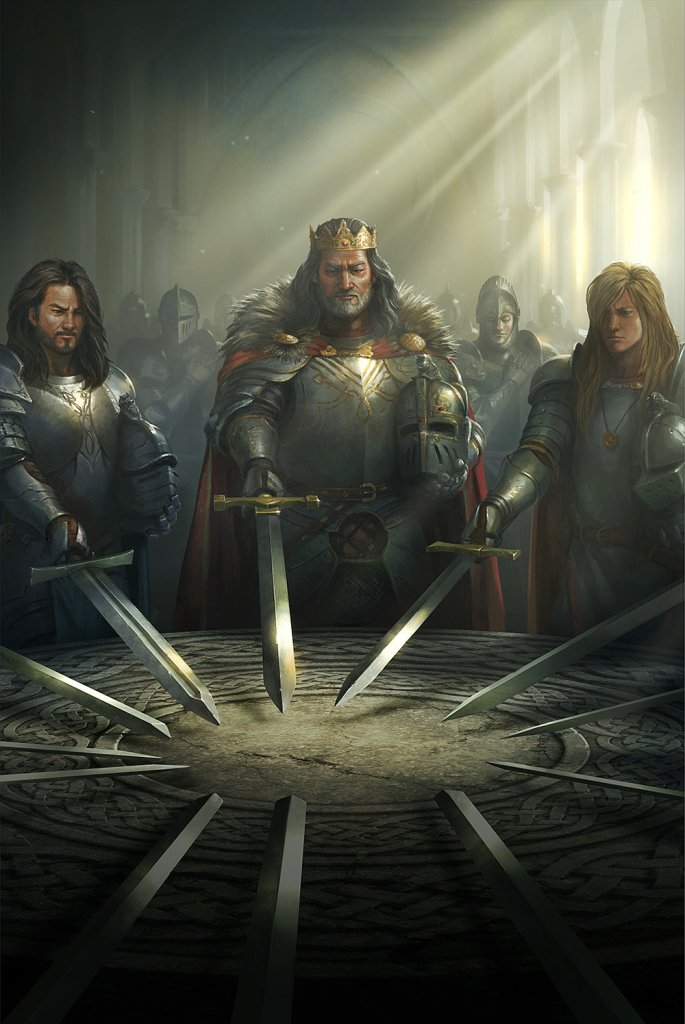
To remind people what the Tānūnaptra in question actually is … it’s that Divine (Rite of the) Covenant between the Gods which, effectively, makes Their dominion viable. To quote some primary source material in translation:
“It is through this that Their Conquest, Their Glory is unassailable”.
[Shatapatha Brahmana III 4 2 8, Eggeling translation]
Or, as the Aitareya Brahmana puts it – “Thence the A’suras could not conquer Their (The Gods’) Empire (for They All had been made inviolable by this ceremony).”
[I 24, Haug translation]
Or, to return to the SBr : This is “the Strength of the Gods, Unassailed and Unassailable; for the Gods were indeed Unassailed and Unassailable while Being Together, and Speaking with One Accord and Holding Together.’ ‘The Strength of the Gods’ doubtless means the Favourite Forms and Desirable Powers of the Gods, ‘Uncursed, Curse-Averting, Uncursable,’ for the Gods have Overcome every curse […]”;
[III 4 2 14, Eggeling translation]
And, per SBr III 4 3 15: “By means of the Sacrifice the Gods Gained that Supreme Authority which They Now Wield.”
[Eggeling translation]
The relevant Hellenic (and later Roman) iterations may be observed within the context of the preparations for the Titanomachy. They are designated therein as ‘Συνωμοσία’ (Syn-omosia) [Eratosthenes Catasterismi 39], ‘Sacra […] Coniuratio’ [Hyginus Astronomica II 39], effectively in both cases the ‘Together-Swearing’ / ‘Conspiracy’.
I had previously written upon all of this – in a preliminary sense, at any rate, in last year’s “The Divine Rite Of The Covenant – The Underpinning Apex As To The Godly Cosmos In Vedic, Hellenic, & Eddic Mythic Expression [ Part 1 – ‘Presaging The Triple-Arrow Thunder’ : The Imperative Oaths To Rudra Tanūnapāt ]“
I intend to return to this again in due course to more fulsomely fill out the whole thing.
Anyway, here’s the pair of Vafþrúðnismál verses:
- “Seg þú þat it tíunda, alls þú tíva rök
öll, Vafþrúðnir, vitir, hvaðan Njörðr of kom
með ása sonum – hofum ok hörgum
hann ræðr hundmörgum –
ok varð-at hann ásum alinn.”
Vafþrúðnir kvað:
- “Í Vanaheimi skópu hann vís regin
ok seldu at gíslingu goðum, í aldar rök
hann mun aftr koma heim með vísum vönum.”
Othin spake:
- “Tenth answer me now, | if thou knowest all
The fate that is fixed for the gods:
Whence came up Njorth | to the kin of the gods,–
(Rich in temples | and shrines he rules,–)
Though of gods he was never begot?”
Vafthruthnir spake:
- “In the home of the Wanes | did the wise ones create him,
And gave him as pledge to the gods;
At the fall of the world | shall he fare once more
Home to the Wanes so wise.”
[Bellows translation]
Now, as for their potential significance …
What one instantly observes is what appears to be Njörðr in the place one anticipates to find Kvasir. I was not aware of such a thing before, and it introduces an interesting dynamic as applies the ‘hostage exchange’ element in the Ynglinga Saga.
And also (perhaps more to the point) serves to resonate with / support my earlier contemplation viz. the “House of Varuna” conceptry with relation to the Tānūnaptra – and consequent ‘reinterpretation’ for the Aesir-Vanir situation.
Now, in terms of a more substantive explication:
Now, here’s the thing. I think that an array of the conceptry around the ‘Compact’ reached with the Vanir [ref. “Sættarstefnu” at Ynglinga 4, “Friðstefnu” at Skaldskaparmal 5] is basically reporting iterations of what we have in Vedic terms as yon Tānūnaptra [‘Rite of the Covenant’] – and which is also found prominently in Hellenic sphere, etc.
What’s interesting is that there are several different ways to conduct yon Tānūnaptra Rite (as one should probably anticipate) … and that various of these different ways to do it, the key focal elements show up in recognizable fashion in different iterations of the cognate mythology amidst the Greeks.
This tells us that the different approaches were assumedly already a thing and semi-differentiated at the PIE level.
I have also identified that a number of these also show up in the Nordic textual canon – one of which being that involving Mimir [and I’ll return to address that with the relevant Hellenic correlate attestations in due course in the future]
Now, the two particular iterations of the Vedic rite which I am thinking of as applies Njordr & Kvasir … one of these is that found at Ait. Br. I 24; the other is SBr III 4 (2-)3 (and c.f. TS VI 2 2).
There are various differences, which I won’t go into in the course of this brief writeup; however for our purposes, it’s like this.
The mythic context is a situation of ‘disunity’ and discord amidst several clades of Gods (which is causing a bit of a problem because there’s also a significant demonic predation going on, inter alia); hence what is required is something to ‘bind together’ said groups of Gods.
Tānūnaptra is, quite literally, an ‘Extension’ [Tanu-] of ‘Kinship’ [‘Naptra’ – like .. Nepots etc.] – secured via the Covenant in question … and with this being significantly linked / embodied in various ways contingent upon what ‘style’ of the myth / rite is being countenanced.
The SBr & TS iterations feature a rather significant Soma-production / empowerment (as in, empowering of such, ) operation.
Why’s that significant? Soma – “That Which Is Pressed”, ‘Kvasir’ – “That Which Is Pressed”; and with various ‘Mead of Poetry’ conceptry flowing therefrom which, as we have demonstrated some time ago, is pretty much bang-on for Soma correlation (and in the specific context of an Upasads ritual suite, if memory serves – the Tānūnaptra elements being significantly also linked / a phase of such).
Now, both the Yajurvedic [i.e. TS & SBr – VS] and the Ait. Br. [the Ait. Br. tending to be RigVedic] approaches feature, as part of this … an ’emanation’, we might say, of the Gods’ ‘favoured qualities’, so to speak.
There’s … some disagreement as to how to interpret the relevant Sanskrit [“priyatamās tanvas” at Ait. Br. I 24 for instance] – I think from memory, Nyāyaratnasiṃha had drawn to my attention that Sayana had actually countenanced it as a … hostage pooling / exchange thing (basically “wife and children”, per Haug’s commentary quoting him in translation for the Ait. Br. iteration), and while I think that’s also relevant … my own interpretation (in light of some other sections that .. we won’t go into for the moment) has tended to be focused more upon ‘essence’ or ‘potency’ from the Gods Themselves going into this ‘guarantee’ vector.
It’s probably best countenanced as both.
Just as, funnily enough, we seem to behold in the Nordic situations under discussion (well, two of three, directly).
How do I mean?
Kvasir is, if memory serves, congealed from the … spit, is it? of the assembled Gods.
That would sound pretty reasonable as an ‘euhemeric’ rendition of sorts for a … pooling of ‘essence’ of a sort – you might say it’s ‘within spitting distance’ thereof.
But what’s going on with Njordr?
Well, this notion of Njord being ‘congealed’ (‘crafted’) bespoke, by the Regin (which is an odd term to see utilized if “Vanir” is simply what is meant, but actually makes quite some sense given the … well, the ‘Vrata-” style conceptry all over this in Vedic, etc.), in order to act as a guarantor for such a ‘Covenant’ between previously disputing groups of Gods …
… you see, at Ait. Br. I 24 occurrence features the ’emanation’ or ‘pooling’ from the assembled Divinities – in a rather particular place.
“Varuṇasya rājño gr̥he” – that is, in the ‘House’ (‘Grhe’) of Varuna the Ruler (‘Raajno’).
What is this ‘House’ ?
Water(s). You know, where Varuna Lives.
What’s Njordr mean again? Or, rather, what’s Njordr significantly connected to?
You see where I’m going with this.
For bonus points, the SBr iteration of the rite has the ‘pooling’ in question happen into a certain figure that is … well, basically … I’ll just quote direct: “hyāhurindro yajamāna iti” – the Yajamana of the proceeding is said deific into which these emanations are invested.
Njord, as you may recall, is (per Ynglinga 4 & 11) a Priest (in addition to having that ‘Drot-‘ title going on : ref., perhaps, the King hailing for Soma in the relevant SBr occurrence), indeed (along with Freyr), the Priest.
In the actual ritual operation involved, the Water(s) are, of course, … rather more ‘contained’ than The Waters at the cosmological scale, and instead are to be found in a relatively smaller metallic (Haug’s own fieldwork observations lead him to state “copper” – and for good reason .. the colouration’s rather useful) vessel , but it bears quite the ‘imprinting’.
As a point of interest, two of the Hellenic sources – Hesiod’s Theogony [784-5], and Lycophoron’s Alexandra [I, about 709] have a golden vessel for the water(s) in question ,”χρυσέῃ προχόῳ” and “χρυσέαις πέλλαις γάνος,”, respectively
In essence … I do not say that Kvasir & Njordr are strictly ‘identical’ due to this
Instead, I would surmise that there has been a bit of a ‘conflation’ due to overlap – so that differing (but still closely related) parts to the same ritual schema(s) which underpin the mythology have ended up with rather more overt ‘overlap’ going on between figures that are being utilized to ‘label’ what should ostensibly be different things even as they are put toward a shared overarching purpose.
I’ve simplified and summarized quite heavily in my attempt to … succinctly [er .. you know what i mean] explain what’s going on in my head with this; and as I say, I’ve quite deliberately not gotten into … an extending array of further correlate conceptry showing up in the various IE traditions both for the ritual / mythic span directly and the surrounding ‘context’ within which it is said to have (originally / supernally) occurred.
And other comments about the ‘Whoms’ involved, as well.
Rest assured it is a subject to which we intend to return – so as to more fulsomely explicate both this additional skein of what’s going on in the Nordic/Germanic sphere, but also the various Hellenic / Roman iterations for same.
But for now, it is enough as a bit of an ‘introductory’ effort that can stand as mid-point to further explorations.
Something like that, at any rate.
 arya-akasha